Sunday, February 8, 2026

DiGanZi dot com has a new home

DiGanZi.com has closed

Thanks to everyone for all the visits in the last 20+ years.

The heritage DiGanZi content has moved to a new home

https://diganzi.wixsite.com/espacediganzi/diganzi-home

where client lists, mission statements and 22 years of brand letters now reside.

For a direct link to a large searchable PDF file of the Global Brand letters:

https://diganzi.wixsite.com/espacediganzi/diganzi-brand-letters-2005-2025 

Friday, November 29, 2024

What Is A Jaguar?

 My esteemed colleague Jack Yan, brand guru par excellence, publishes the yearly Autocade yearbook, an outstanding in-depth peek at vehicular trends. This season - to coincide with the release of his newest edition - I've asked him to contribute a blog about Jaguar's abrupt volte-face from his very informed perspective. His text follows:

    Jaguar Land Rover announced some time back that it didn’t see Land Rover as a brand any more. It would rather we think of Defender and Discovery as brands, just as do with Range Rover. Jaguar, it said, would no longer chase BMW and Mercedes-Benz volumes, but be something rather more exclusive. Britain itself would see its car-making numbers drop with ripple effects through the wider economy …

But is it that simple? While Range Rover has indeed existed for most of its history without Land Rover—for years it was part of Rover itself, before the green badge appeared on the grille as a form of endorsement—it’s hard to think of Defender and Discovery without their Land Rover roots. British Leyland tried marqueless cars from time to time: Maxi, Princess, even Maestro and Montego … and the only one that really graduated into marquedom was Mini. Parent company Tata’s “house of brands” is a gamble.

And Jaguar—can it really extend upmarket after years of being forced downmarket? Tata sees it as the next Bentley.

Certainly the new materials signal a massive departure from the past. We know Jaguar was forced to cancel its earlier XJ successor, in favour of a more ambitious EV, and it seems the new car won’t have much of a connection to the past.

Jaguar could only trade off its heritage for so long, something which only served to keep its median purchaser age high in the 1990s. The compact X-type of the late 1990s was, at best, an abbreviated Jaguar, almost a pastiche. It was only after the arrival of Ian Callum that Jaguar began having an eye on the future, and the last XJ was meant to signal a future in ‘beautiful, fast cars’. The brand and its symbols gently evolved: this was the same Jaguar history, but added chapters; the same storied past but packaged with greater modernity.

It was like that other British brand, James Bond, through the 1990s and early 2000s: Pierce Brosnan might be driving an invisible Aston Martin in his last outing, but rest assured, this was supposed to be the same cinematic James Bond that started in 1962.

Then came a reboot.

Jaguar is in the same boat. Its Callum design language has come to a close. It is time for a reinvention. The last time it did something like this was with the XJ-S in 1975. And those proved difficult to shift, not just because there was an OPEC embargo on.

The symbols are all new. The leaper appears with 16 horizontal lines, broken at places to form the sign of the cat. A 1980s video game motif? Or a signal to say that the ghost of Jaguar is here … but it’s not the Jaguar of old.

Maybe this is all right. It’s not a retro future then.

Then the logotype. Looking like Herbert Bayer’s Universal Alphabet, the Jaguar script is in a mixed upper- and lower-case, but all at the same height—think Bodoni No. 26. To heck with tradition. Childish or daring? Certainly a departure, with no Jaguar script ever looking like this.

Then there’s the new symbol of the two Js, one inverted (or it could be an r). Gone is the growler, the face of the Jaguar. Easy to draw for a child, like the three-pointed star of Mercedes-Benz. If the exclusivity that fashion brands convey is what Jaguar is trying to get at, then maybe there is a parallel with the linked Gs of Gucci or the linked Cs of Chanel. Except both came through a natural creative process. They evoke the era in which they were created. It’s difficult not to be cynical.

Jaguar promises its new limousine will be bought because of its styling, a car likely to have dramatic front and rear wings, eschewing the aerodynamicism of China’s Geely Galaxys, Zeekrs and Stelatos. Never mind the electric powertrain, it has a long bonnet. It’s going against trends, but then, has Jaguar—the true, innovative Jaguar from the 1940s to the 1960s—ever gone with them? It’s always blazed its own trail.

But Jaguar—which hasn’t had the best track record when it comes to quality—got away with a lot of it by being well priced. Not this Jaguar, priced at roughly double its current range’s numbers. Jaguar expects 85 to 90 per cent of its customer base to vanish. We expect the same customer base to be fashion-fickle, and that Jaguar isn’t on to the next XJ, but the next Aston Martin Lagonda. The wedge one. Super-exclusive but not as timeless as they might think.

All we can safely say, without seeing the product and the marketing mix, is that it’s a high-risk strategy. History isn’t on Jaguar’s side, but then, history has run its course for the brand. Indeed, to quote one of Jaguar’s former owners’ founders, history is bunk. And certainly, the Jaguar of 2026–7 doesn’t have much need for all that equity. 

Wednesday, May 11, 2022

Cultural bias in pharmaceutical packaging

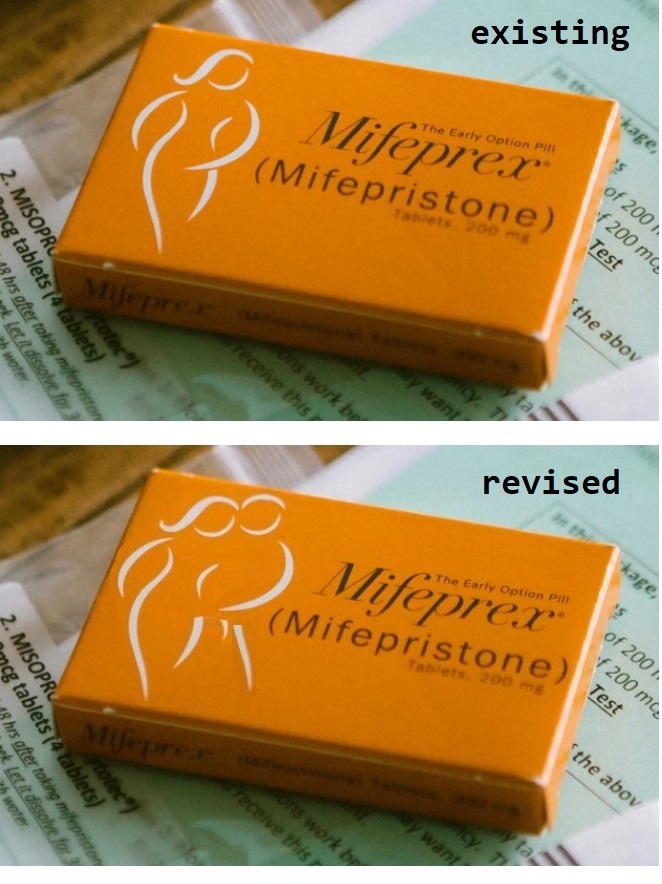
 Here's a suggested design intervention to more accurately position a drug product.

The leaked SCOTUS draft opinion on rescinding Roe v. Wade provoked another look at product branding and the innate prejudices inherent in the package design for what is tag-lined "The Early Option Pill." Men bear half the responsibility for the condition. The existing Mifeprex package art focuses solely on a lone female's arm directed at the womb, a gender-specific marketing signal which ignores the father. I've updated the illustration and added a masculine figure with post-coital penis, his arm directed toward the reproductive regions. The revised treatment is a more accurate product-specific depiction of the drug's actual audience. 

Monday, September 27, 2021

Travel and Hospitality Trends

 Here's an article I recently authored for Toronto-based Branders magazine.


Where are we headed now?


Let me first tell you a tale of a vanished world, a more innocent time when people wandered freely and visited new places at the last minute; effortlessly crossed borders without interruption; witnessed romantic panoramas (accessorized with hot tubs, palm trees, hammocks and always-full champagne flutes) in the most exotic of island destinations; took many a selfie on enviable backdrops; stayed in luxurious hotel suites; sought out the best deals on the internet and came home Monday mornings energized after spontaneous getaway weekends.

But then a plague swept across the land and changed everything. Suddenly you couldn’t travel for pleasure or for work. The airline business went belly-up. Car rentals, forget about it. Your favorite small and mid-sized hotels shuttered. You had to stay home, or wear a mask when you went out. Cool destinations became inaccessible. Big chain hotels downsized their brands. Thousands of service jobs evaporated. Only private jet travel boomed.

What can be told about the brand world of the future, now that mass tourism as we knew it is a figment of the past?


1. Brands will need to attract new talent, train new people, and emphasize workplace improvements to retain team members. With the loss of so many jobs and people reluctant to rejoin the workforce, it’s going to be arduous to get replacement staff into service positions. Prepare for tough times ahead in HR Departments.


2. The age of bargains is over. As brands struggle to recoup lost revenues, travel is going to be more expensive than it was before, with fewer irresistible deals. The getaway weekend special is on temporary hold until the industry stabilizes.


3. A younger demographic will venture forth, eager to get out after being sequestered so long, prepared to spend discretionary income on better adventures. But these adventures will need to track with their hopes and ideals. Youthful travelers will seek values-driven experiences that may involve cultural immersion, community engagement, good deeds built into relaxing holidays. Gen Z prefers glamping to cruise ships.


4. The luxury sector will be the first to rebound. The one percent is ready for a return to action. Among its seven ultra-exclusive hospitality offerings, the French Airelles chain recently opened a 14-suite property on the grounds of the Château de Versailles, where rates start at just above US$2000 per night for the entry level room.


5. Brands will need to promote their sustainability credentials. Green Pearls, a German chain with international presence, chooses its member properties based on sustainable initiatives and green projects. Their brand marketing focuses on owner profiles, ethical policies, local engagement, hotels and holiday homes in historic buildings, smaller scale, and zero food miles in F&B offerings.


6. Look for synergies generated around collaboration and cobranding. Already Airbnb has brand partnerships with Ikea and Lego. The small airline Eva Air has a branded jet emblazoned with Hello Kitty.


7. Big chains will grow meeting and conventions business. Volume is the name of the game. Heritage Hotels of Lisbon has spent the pandemic upgrading existing properties and preparing for the return of larger scale parties. Their brand emphasizes authentic Portuguese style and comfort.


8. Staycation is the new green. Travelers will opt for longer single location stays. Family-friendly resorts and residences will focus on long-duration guests with full-service offering. The Baglioni Group, an Italian luxury brand, shuttered four Italy multi-room big city properties and in June opened The Baglioni Resort Sardinia, located on Sardinia's north-east coast. They have a second resort newly-opened in the Maldives.


9. Ask the team. During the pandemic Hoshino Resorts, a remarkable Tokyo-based hotel group who have many hot water spa properties on the Japanese archipelago, retained all their staff, albeit with reduced hours. They asked their team for suggestions on pandemic workarounds, how to better accommodate guests, ways to make their service more responsive and efficient. One great innovation was a custom app which advised guests of wait times and guest numbers at spas. Another staff-generated brand strategy in response to reduced travel itineraries was to attract guests who lived closer to the resorts.


10. Market locally. Along the lines of the Hoshinoya strategy, Accor, a monolithic French hospitality chain, oriented its Pullman sub-brand to attract neighborhood clients by emphasizing culture, and offered public areas at their hotels as a welcoming meeting place for local traffic.

Sunday, July 11, 2021

Conversations with Gottschalk, Part 3: airlines

Fritz Gottschalk, the grand old man of Swiss Design, is founder of Zürich-based Gottschalk+Ash, international design consultants. (Spoiler alert: I’ve served as international brand guru for the firm since 2003.) Fritz designed what is inarguably the foremost example of nation-branding on planet earth, the legendary Swiss passport, executed in 1985.


This is the last of 3 conversations with Fritz, straight talk about the shape of strategic branding today. Our first conversation dealt with the latest evolution of automotive logos; our second conversation looked at the French petro giant Total’s latest logo evolution. For our third conversation, Fritz looked at a number of airline brands. With the reopening of the travel market and the entry into market of a number of newcomers it seemed like a good topic to engage. 


Fritz is of the emphatic opinion that airline brands began from a point of reverence for perfect design reflecting engineering, but have since devolved to examples of simple garish embellishment. Aircraft, he said, were always beautiful because they were innately functional. At the outset, the public viewed air travel with awe and respect. The cost of an air ticket was in synch with the respect of and joy for flying. Now that air travel has become the mode of transport for the masses, the quality of the art has “hit rock bottom.” More than once he used the word garish to describe the state of current design.


I began by asking Fritz what he felt the greatest airline brand ever made was. Of course, he chose the masterful solution for Swissair created by Karl Gerstner. A look at the level of craftsmanship which endures shows the excellence of the brand work. A careful examination reveals that Gerstner preserved the proportional nuance of 7:6 in the Swiss cross - a perfect square only exists at the center point of intersection. A detail like that is what makes for great design.


It was the correct moment to engage the classics.


Fritz called Vignelli’s famous 1968 identity for American Airlines “concise, intelligent, underpowered and drab.” He cited the unpainted aircraft as a downside of the branding, but he was complimentary about the double-A+eagle symbol.


We spoke about the legendary 1965 solution for Braniff, a lesser airline which was put on the map by the advertising agency Wells Rich Greene. Fritz characterized it as “pure marketing” and felt it heralded a new generation of design. I felt it was a prescient solution, since today all luxury brands have collaborations with artists like Calder and fashion houses like Pucci. So Braniff re-thought a staid idea to good effect. The idea endures.


Fritz had praise for the Eastern Airlines brand over the years. He called the legacy solution elegant, timeless, to the point, and sophisticated. A recent rebranding in 2020 referenced the Braniff solution, and simplified the logotype, while retaining the heritage symbol, seen on the aircraft tail.


Fritz also had kind words for the abiding purity of the KLM and Lufthansa brands.


I interjected that I always liked the vintage SAS brand

I appreciate the use of italics to suggest motion and movement, the sparse letterforms reminiscent of Optima, the simplicity and economy of Scandinavian design.


I asked Fritz to reflect on the classic Pan Am brand.

He characterized it as wonderful, reminiscent of the great times in which it was created. He reminded me that great brands are always close to the beat of their times.


It’s true. The classic vintage Pan Am shoulder bag still stands as an emblematic accessory for all travelers.


Vueling is one of the last brands executed under the supervision of the late Wally Olins. A Barcelona-based budget airline, their graphics are distinguished by a minimalist treatment and a playful attitude. The website is quite efficient, the rates are low, and the service reliable. 


Unfortunately, American’s recent rebranding is a weak substitute for the intelligence and clear-headed iconography of Vignelli’s earlier work.


Next we touched on the ultimate budget airline, the much reviled Easyjet. Fritz said that there was no thinking evident in this solution. The absence of any typographic sophistication, the blatant marketing, and the aircraft as a flying billboard contribute to prevalent visual pollution. Fritz also observed that this disturbing branding degrades the beautiful shapes of aircraft, which are in themselves elegant sculptural objects.


It seems like Southwest’s designers revisited Braniff’s ideas to apply primary color and supergraphic treatments to their aircraft. They are nowhere near as exciting as those generated a half century ago.


Now to the flood of garish newcomers to the marketplace.


Volotea, a budget airline that covers the eastern Mediterranean, has partnered with Aegean to add destinations in Greece. The brand identities are decorative and can barely be distinguished from each other- so the partnership dilutes each, and reduces differentiation.


Air Dolomiti has an undistinguished signature reminiscent of other brands, not all of them in the airline business. The decorated tail of their aircraft looks like the logo has been dumped over a confusing motif and obscures any brand identification. Coupled with a confusing typographic solution, the brand does not inspire confidence.


The same malaise afflicts Avelo. An uninteresting typographic solution coupled with a confused cosmetic motif gives the brand little distinction.


Looks like a private jet, doesn’t it? But Breeze adds a double marketing flourish to its signature, a check mark and an embedded pun. We are supposed to think it is easy to travel with these folks. If it’s so simple, what does the check mark represent?


French Bee is a new transatlantic budget airline, €220 from Paris/Orly to NYC. I am not sure I see a bee, but I do see a butterfly. Or perhaps a shamrock? Misleading advertising implies the low number is a round-trip, which it is not. 


The extremely popular low-budget carrier jetBlue borrows a typographic figure from the iMac universe, but it’s a shabby treatment plastered on a confused background which appears on the aircraft tail. The graphical solution correctly suggests a no-frills experience.


Small Planet looks like they have harvested their logotype from Google. And then pasted a fruit salad over the tail of the aircraft. One has the impression the multicolor and childlike type treatment is supposed to suggest diversity and play. It may also suggest, “Don’t take us too seriously.”


Budapest-based Wizz Air suggests they will turn things upside down in a surprising way. Yet they seem to have borrowed their color palette from Air New Zealand or any of the South Asian carriers. Their typographic twist uses the inverted i character to suggest the Spanish exclamation point. In case you missed it, their website is shown on both the aircraft side and on the jet engine. 


Finally, Fritz cites Qantas for once-noteworthy brand work. But their latest redrawing has simplified the kangaroo icon, so that the poor creature has lost its arms. A more legible type treatment has been adopted. The addition of computer-rendered gradation on the aircraft tail motif has devalued the brand representation.